
Creating new materials (the physical kind)
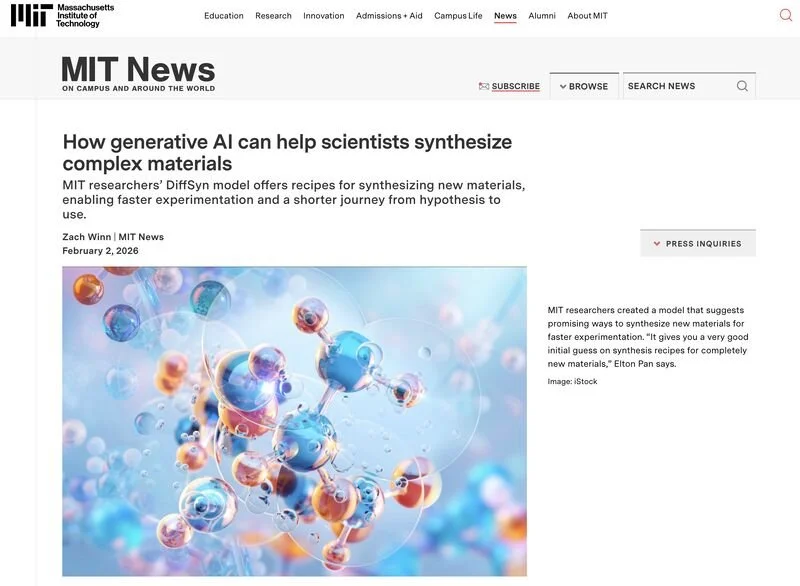
MIT researchers in the field of Materials Science and Engineering have been using AI to create libraries of theoretical materials that could help solve all kinds of problems.
The problem, is how to turn them from theory into materials. Materials synthesis is not as simple as following a recipe in the kitchen. Factors like the temperature and length of processing can make a big difference to a material’s properties that make or break its performance.
Their tool, DiffSyn, examines 23,000 lab recipes across 50 years to guide scientists through the process of making materials by suggesting promising synthesis routes.
In a recent paper, they show how DiffSyn provide detailed instructions on crafting complex materials such as zeolites (tiny sponge-like rocks, made of silicon and oxygen and used as filters and fuel-making) that showed improved thermal stability.
The researchers believe their new model could break the biggest bottleneck in the material’s discovery process.
“To use an analogy, we know what kind of cake we want to make, but right now we don’t know how to bake the cake,” says lead author Elton Pan, a PhD candidate in MIT’s Department of Materials Science and Engineering (DMSE). “Materials synthesis is currently done through domain expertise and trial and error.”
SOURCE
MIT News: https://news.mit.edu/2026/how-generative-ai-can-help-scientists-synthesize-complex-materials-0202
Nature Paper: https://www.nature.com/articles/s43588-025-00949-9